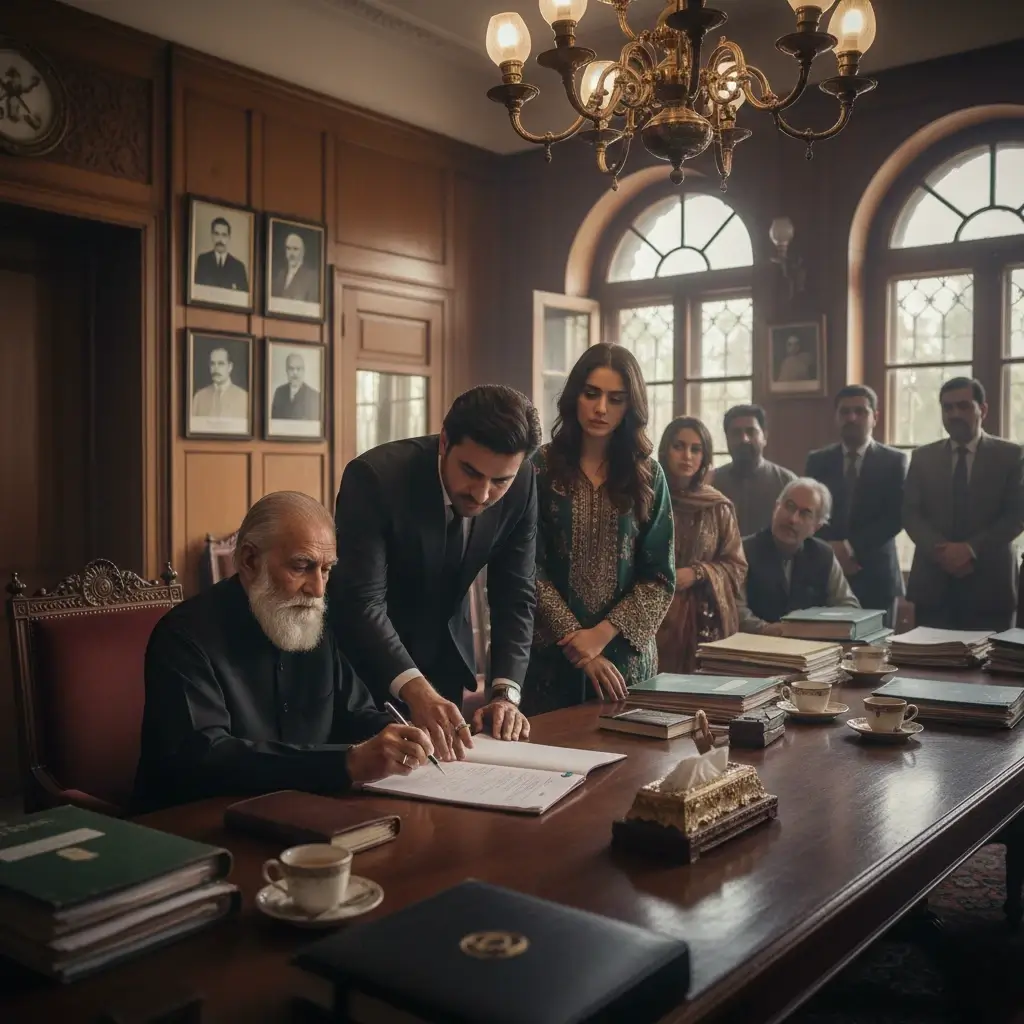
Today we are going to discuss a very intriguing topic that has captured the attention of many: the future of dynastic politics in Pakistan.
Dynastic politics, where power is transferred within families, has been a prominent feature of the country’s political landscape. In fact, it’s not only prominent but quite worrisome for some politicians and citizens of the country.
What they really want is to change the trend and break free from this cycle of family dominance. However, we all know that it’s not that easy, right?
From the Gandhis in India to the Bush family in the USA, dynastic politics has always existed — and unfortunately, nobody has ever truly gathered the courage to eliminate it completely.
In this article, we’ll explore what dynastic politics is, the factors influencing this trend, and what damage it could cause in the future.
So, grab a steaming cup of tea ☕ and let’s kick off this important conversation.
What is Dynastic Politics in Pakistan?
Dynastic politics in Pakistan can be defined as the transfer of political power within certain families.
In this system, one generation of politicians occupies all the key positions in a party, and as a result, more qualified and capable individuals are often pushed into the shadows.
The reality is that this transfer of power from one generation to the next has become a long-standing tradition. Unfortunately, it has now reached a point where it seems nearly impossible to change.
Several factors continue to keep dynastic politics alive in Pakistan, including:
- The influence of powerful political families
- The lingering impact of feudalism
- The internal structure of political parties
Over time, politics has started to resemble a family affair, deeply rooted in the political system.
PPP and PMLN – Major Names in Dynastic Politics
Yes, you read that right.
We cannot ignore the fact that the Bhutto family, the Sharif family, and other influential political dynasties have consistently remained at the top of Pakistan’s political hierarchy.
The Bhutto family, led by iconic leaders such as Zulfikar Ali Bhutto and Benazir Bhutto, has left a lasting impact on the nation. Following Benazir Bhutto’s tragic death, Bilawal Bhutto Zardari assumed the chairmanship of the party.
Similarly, the Sharif family — with Nawaz Sharif and Maryam Nawaz — has also played a major role in shaping Pakistan’s dynastic political culture.
These examples clearly illustrate how leadership within major political parties is often treated as an heirloom rather than a responsibility earned on merit.
Factors That Influence Dynastic Politics in Pakistan
Several key factors contribute to the persistence of dynastic politics in Pakistan.
Name Recognition and Political Legacy
Popular political families enjoy high levels of trust and recognition, built on decades of political presence, achievements, and public familiarity. This recognition often provides a strong advantage when contesting for party leadership or electoral positions.
Personal Connections and Networks
In Pakistan, personal networks and political connections play a critical role. Political families usually have access to loyal party workers, financiers, and supporters who help secure nominations and electoral victories.
The Role of Feudalism
Feudalism continues to reinforce dynastic politics, particularly in rural areas. Feudal lords control land, resources, and local influence, which often translates into political dominance — usually at the cost of national development.
Political Parties as “Family Businesses”
Most major political parties in Pakistan now operate like family-run enterprises, where leadership is passed down through generations. This centralized control makes it extremely difficult for new, capable individuals to rise through the ranks.
For example, even if a highly qualified and intelligent individual joins a political party, they may spend their entire life struggling for recognition — simply because they do not belong to the ruling family of that party.
The Future Outlook
Dynastic politics continues to prevail in Pakistan, but the landscape is gradually changing.
Several factors are reshaping the future of politics, including:
- An increasingly educated and aware youth
- Rapid technological advancement
- The rise of social media and digital platforms
These changes have led to a growing demand for transparency, accountability, and merit-based systems.
Social media has become the voice of the public, allowing citizens to question leaders, expose shortcomings, and hold political figures accountable in real time.
The youth of Pakistan — a significant portion of the population — are becoming more politically engaged. They demand new faces, fresh ideas, and policies that reflect their aspirations.
While established political families may continue to dominate certain regions due to long-standing loyalties and lack of alternatives, this trend is unlikely to sustain itself indefinitely.
However, it’s important to acknowledge that dynastic politics will not disappear overnight. These families still hold substantial influence, and dismantling their dominance will require sustained effort from both citizens and political parties.
Ultimately, the future of dynastic politics in Pakistan depends on how strongly citizens demand a fair, merit-based political system — one that prioritizes competence over family ties.
Conclusion
Dynastic politics can be both harmful and advantageous, but the urgent need is to shift towards a merit-based system where leadership is earned, not inherited.
Societal change, technological advancement, and evolving demographics are slowly reshaping Pakistan’s political environment.
The future of Pakistan’s politics lies in the hands of its citizens — those who are willing to demand fairness, accountability, and equal opportunity for all.
Let’s remain hopeful, informed, and engaged in building a political future where every citizen has an equal chance to lead and contribute to national progress.
Change is possible — but only with consistent commitment from both the public and political leadership.