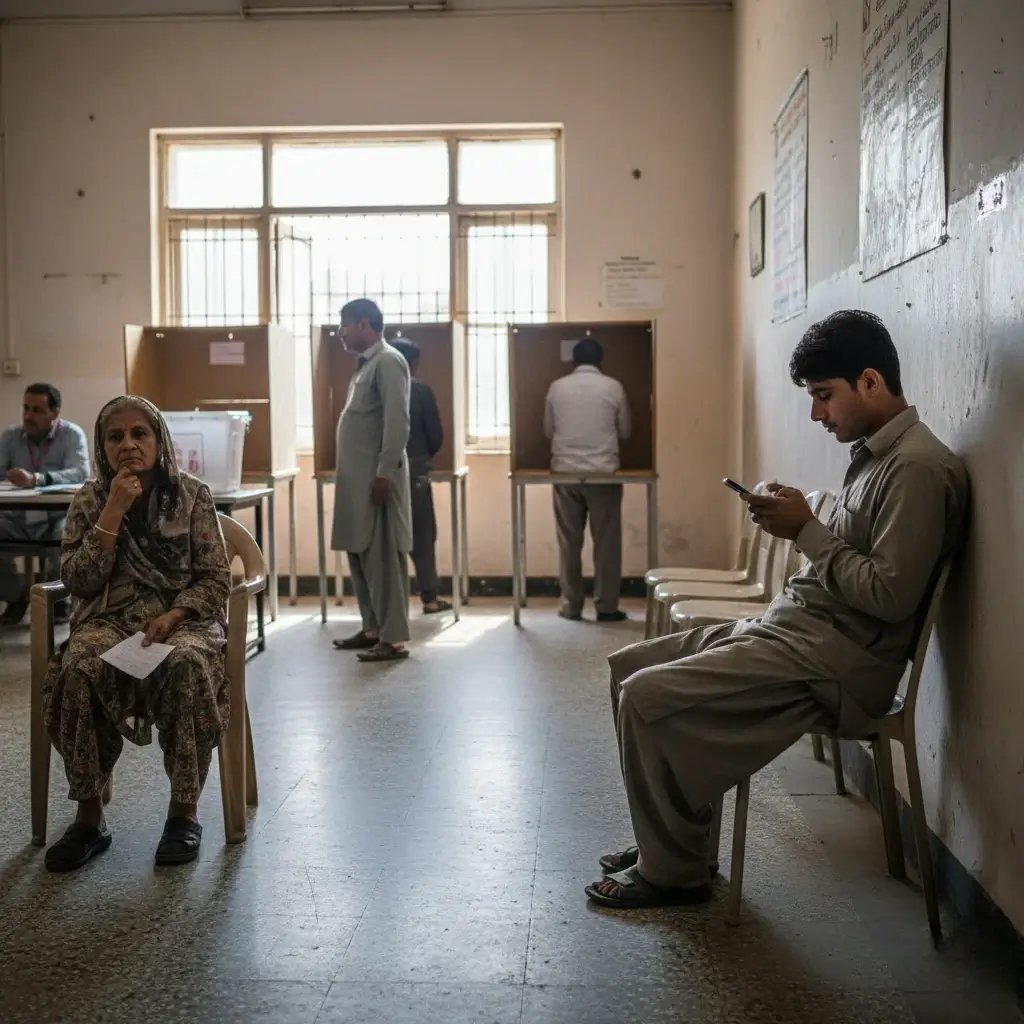
“I have no plans to vote for anyone in the election, and neither my family members nor friends are planning to do so…”
I heard my colleague say this to someone on a phone call, and it instantly made me wonder — what’s the reason behind that?
Isn’t voting our civic duty? Isn’t it our responsibility to choose a leader who can handle the country better and run things smoothly?
Maybe many people don’t feel the same anymore due to constant mishandling, conflicts, and disappointment.
People who don’t want to vote usually don’t care who wins the election. But the reality is — it affects all of us directly. A single vote can change the entire situation, yet very few people truly understand this.
Later, I told my colleague that I overheard her conversation, and since then, I’ve been thinking about why she isn’t interested in voting.
Her response was simple — yet deeply worrying:
“No politician or leader has ever helped us during the dark times.”
And sadly, she’s not alone. Many people feel exactly the same.
Deciding not to vote is a personal choice — but this decision can have serious consequences for the entire country.
Let’s explore some common reasons why people choose not to vote.
People Don’t Trust the System
There are thousands of people who simply don’t trust the system.
They have witnessed corruption, injustice, and poor governance — and they blame the government for everything that goes wrong. Instead of understanding our own responsibilities as citizens, we often place all the blame on authorities.
People who don’t trust fellow citizens and don’t believe the government can do the right thing are naturally reluctant to vote. They feel that everyone in power is only concerned about personal benefits and not about public suffering.
Many even believe the electoral system is rigged, making their vote completely useless.
People Don’t Like the Candidates
Another major reason people avoid voting is dislike for the candidates.
As one of my close friends once said:
“Until there is someone I can trust with my whole heart — someone who can genuinely change things — I’m not voting.”
This mindset is very common today.
Many people feel candidates lack capability, vision, or integrity. Some believe a certain candidate is simply not suitable for the role, incapable of bringing positive change.
As a result, instead of choosing the “lesser evil,” they choose not to vote at all — waiting endlessly for the perfect candidate.
ALSO READ
- Most Influential Pakistani Politicians
- Check Your Vote Online Registration
- How to Gain Votes in Rural Areas in Pakistan
- How to Attract Women Voters in Pakistan
Politics Isn’t Their Thing
This might sound surprising, but it’s very real.
Thousands of people genuinely hate politics. They believe politics isn’t for them, so they avoid it completely.
This doesn’t mean they don’t love their country — it simply means they don’t want to engage in political discussions or processes.
Politics feels complicated, messy, and full of conflict. Many young citizens fall into this category. Instead of following news or political developments, they stay busy with personal lives, entertainment, or careers.
They feel uninformed and believe voting won’t change anything anyway.
Introverts Are Less Likely to Vote
According to various analyses, introverts are less likely to vote.
Unlike extroverts — who openly express opinions and engage in discussions — introverts tend to keep their thoughts to themselves. Even if they like a candidate, they may not feel compelled to vote.
They are less assertive, less outgoing, and often avoid situations that require public participation — including voting.
Extroverts, on the other hand, not only vote themselves but actively encourage others to vote as well.
People Believe Voting Is an Irrational Act
Another common belief is that voting is irrational.
People think standing in long queues for hours won’t bring justice or improve their lives. They believe a single vote will never swing an election or create meaningful change.
This mindset needs to change — and history proves why.
Consider this powerful example:
- 1800: Thomas Jefferson was elected President by just one vote in the House of Representatives after an Electoral College tie.
- 1824: Andrew Jackson won the popular vote but lost the presidency by one vote in the House to John Quincy Adams.
These moments prove one thing clearly:
A single vote can change history.
So tell me — what’s irrational about voting now?
ALSO READ
- Most Influential Pakistani Politicians
- Check Your Vote Online Registration
- How to Gain Votes in Rural Areas in Pakistan
- How to Attract Women Voters in Pakistan
Conclusion: Why Your Vote Matters
If you believe one vote in a sea of millions doesn’t matter — you’re wrong.
Your vote may not directly elect a president, but when combined with thousands of others, it absolutely shapes the final outcome.
If you are a politician who genuinely wants to bring visible change, let us help you make an impact. When people trust you, they don’t just vote for you — they believe in you.
📌 Contact our team at One Politician and discover what makes us different.
And if you truly want voters’ trust, make sure you read this next:
👉 Read More: How to Manage Your Political Campaign Successfully?